Navigate this guide · 1,676 words
The essential signal
- 1. On October 16, 2026, San Francisco's mayor signed a 45-day citywide moratorium on data center development; the Board of Supervisors had approved it unanimously, and state law could allow an extension of up to 22 months.
- 2. The drivers are physical, not ideological: electricity costs, water consumption, and community impact — the AI boom's footprint is colliding with local infrastructure limits.
- 3. The financing behind the boom is stressed too: CoreWeave's bonds fell to distressed levels this week as credit markets repriced AI infrastructure debt.
The city that hosts AI just paused it
On Friday, October 16, 2026, San Francisco mayor Daniel Lurie signed a 45-day moratorium on data center development, temporarily halting new approvals citywide while officials study what AI infrastructure actually costs the city that hosts it [1][2]. The Board of Supervisors had approved the measure unanimously the previous week, and the ordinance would have taken effect even without the mayor's signature — the signing deadline was Friday [1][2].[1][2][4]
The symbolism is hard to miss. San Francisco is home to the headquarters of OpenAI and Anthropic, two of the companies most responsible for the AI boom now straining the world's power grids [4][8]. Yet the measure is narrower than the symbolism suggests: it does not shut down existing data centers, ban either company from operating, or stop AI services from running — it concerns the city's approval of new data center development within its own borders [4].[1][2][4]
How the vote happened
The measure was introduced by Supervisor Shamann Walton, who has argued that the city's zoning rules lack a clear definition of what a data center even is — a gap that makes the facilities hard to regulate before they arrive [1][2]. Board President Rafael Mandelman expedited the measure's consideration, according to reporting by the San Francisco Standard cited in national coverage [1][2].[1][2]
On social media, Lurie framed the pause as protecting the city's position rather than retreating from it. "San Francisco is the national leader in innovation, and that innovation is one important driver of our city's recovery," he wrote. "We can never take that position for granted" [1][2]. The city, he said, would spend the 45 days developing a framework that supports the technology infrastructure hospitals, offices, academic institutions, and government rely on — while prioritizing community needs, keeping electricity rates low, and protecting clean water and air [1][2].[1][2]
What the moratorium actually does
Strip away the politics and the mechanism is a standard planning tool: a temporary, citywide interim zoning moratorium that holds off new data center approvals while the Planning Department assesses the facilities' demands and drafts longer-term rules [2][3]. It is explicitly not a permanent ban. After the review period, San Francisco could adopt lasting controls, choose a lighter-touch approach, or let the pause lapse [3][4].[2][3][4]
The pause could also last considerably longer than 45 days. Under state law, the city could extend the moratorium for up to 22 months if it needs more time to complete its review, though supervisors have not approved any extension [3][4]. A hearing is expected by November to update supervisors on the Planning Department's progress — the first checkpoint in what could become a much longer regulatory process [3].[2][3][4]
The power problem behind the politics
The official rationale centers on three concerns: electricity costs, water resources, and effects on surrounding communities [1][2]. The power concern is the most immediate. AI-grade server racks now draw vastly more electricity than the standard racks of even a few years ago, and utilities in several regions have warned that data center demand is arriving faster than grid upgrades [7].[1][2][7]
The global numbers explain why local officials are nervous. The International Energy Agency projects data center electricity consumption could reach roughly 950 terawatt-hours by 2030 — about three percent of global electricity demand — with AI workloads driving most of the growth [7]. When a single facility can draw as much power as a small city, the question of who pays for grid upgrades stops being abstract and starts showing up in residential electricity bills [1][7].[1][2][7]
The water problem nobody budgeted for
Water is the quieter crisis. A 2026 analysis by the nonprofit Ceres estimated that electric power generation serving data centers across seven US states withdraws roughly 3.4 trillion gallons of freshwater every year — more than California's entire urban water demand, and about twelve times the combined annual water use of Los Angeles, Phoenix, and Washington, DC [5][6].[1][2][5][6]
Two-thirds of the water-dependent power plants supplying those data centers sit in areas already facing medium-high to extreme water stress or drought, according to the same analysis [5][6]. California's data center power generators alone accounted for about 1.4 trillion gallons of withdrawals, with Virginia's data center corridor adding another 753 billion [5][6]. Ceres measures withdrawals rather than consumption — much of the water is returned after use — but the figures still map the scale of the infrastructure AI depends on [6].[1][2][5][6]
Why permits became the choke point
Ask most operators what will bottleneck AI infrastructure and the answer used to be GPUs, transformers, or switchgear. The emerging answer is more mundane: paperwork, planning, and process. San Francisco's moratorium is the most visible sign yet that the binding constraint on AI's physical expansion may be the speed at which communities approve it [1][2].[1][2][3]
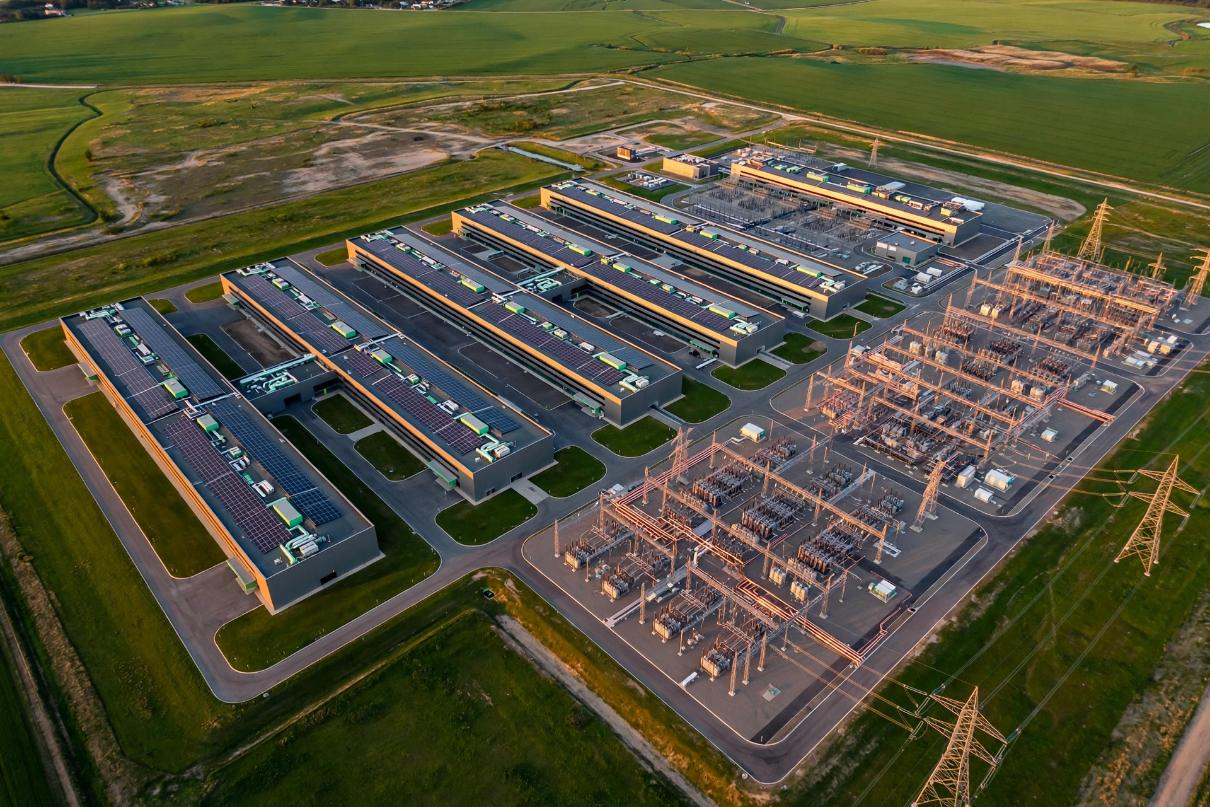
The logic is straightforward. A modern AI data center occupies the footprint of several football fields and draws more power than most nearby industrial parks combined — and in most jurisdictions, it triggers public hearings, environmental review, and utility negotiations before the first foundation is poured [3]. Each of those steps is a venue for the same questions San Francisco is now asking formally: what does this cost us in power, water, and neighborhood impact, and who pays [1][3]?[1][2][3]
The money behind the boom is stressed too
The physical backlash has a financial parallel. This week, credit markets delivered one of their clearest stress signals yet on the AI buildout: bonds issued by CoreWeave, the GPU-cloud company, fell to distressed levels, with yields on some notes climbing to roughly 15 to 16 percent [8][9]. The cost of insuring CoreWeave's debt against default — its credit default swap spread — climbed to about 1,000 to 1,200 basis points, a level that implies roughly a 60 percent probability of default within five years [8][9][10].[8][9][10]
CoreWeave carries roughly $50 billion in total debt, according to LSEG data, making it one of the largest borrowers tied to the AI infrastructure boom [8][9]. The company built its balance sheet through a series of large private credit facilities: $2.3 billion backed by GPUs in 2023, $7.5 billion in 2024, and $8.5 billion anchored by Blackstone Credit & Insurance this March [8][9]. About $4.4 billion comes due by the end of 2026, with another $6.2 billion landing in 2027 [9][10].[8][9][10]
What the lenders are actually saying
The important nuance is that lenders have not stopped financing AI infrastructure — they have started charging more for the risk. "There is still a price. Investors are still comfortable financing it, but they're demanding more compensation for it," James Martin, senior US credit strategist at SMBC, told Reuters, noting that investors favor projects closer to completion with fewer hurdles before entering service [8].[8][9]
CoreWeave's management points to a contracted backlog of more than $100 billion with customers including Microsoft, OpenAI, and Meta, and has rejected claims of imminent distress [9][10]. The debate spilled into public view when investor Chamath Palihapitiya suggested AI spending may be creating a private credit bubble and Elon Musk replied with a single word: "Yikes" [9][10]. Whether the repricing stays contained to the most leveraged borrowers or spreads wider is now one of the boom's central open questions [8].[8][9]
Startups are racing to fix the power gap
Not everyone is waiting for permission. US startups developing technologies to address power and computing constraints in AI data centers raised $33.5 billion in funding by early October 2026 — nearly double the total raised in all of 2025, according to a Morgan Stanley report [11][12]. Investors are increasingly backing technologies that combine energy supply with computing infrastructure, as power availability emerges as the binding constraint on data center expansion [11][12].[11][12]
The report found that more than 80 percent of 2026 funding went to companies working to expand power availability or improve computing performance per unit of electricity [11][12]. Perhaps most tellingly, the worlds of energy and computing capital are merging: in 2026, 73 percent of funding rounds in the power and computing segments included investors who had already backed companies in the other segment, up from 49 percent in 2024 [11][12].[11][12]
The pattern goes beyond one city
San Francisco's vote did not happen in a vacuum. Across the United States, data center proposals have faced organized local opposition over the same trio of concerns — power bills, water, and community impact — and several jurisdictions have slowed or conditioned approvals [3][4]. What makes the San Francisco case notable is the location: the industry spent two years fighting zoning boards in exurbs and farm towns, and has now lost a vote in the city where its most famous companies are headquartered [8].[1][3][4]
The through line is that AI infrastructure has become too big to be invisible. When data centers were modest office-park buildings, few residents noticed them. At hundreds of megawatts, with dedicated substations and water infrastructure, they are impossible to miss — and impossible to approve quietly [3][7]. Every future facility will now be debated on the terms San Francisco just formalized [1][4].[1][3][4]
What this means for the AI boom
The honest reading is that none of this stops AI development. Models will keep training, services will keep running, and the moratorium explicitly leaves existing facilities and current operations untouched [4]. What changes is the cost and timeline of physical expansion: every new large facility now faces a longer, more public, more expensive path from proposal to power-on [1][3].[1][4][7]
That has second-order effects. If permits slow construction while demand keeps growing, the value of already-permitted capacity rises — rewarding incumbents with built infrastructure and raising the bar for new entrants [7]. It also strengthens the hand of anyone selling efficiency: chips that do more per watt, cooling that uses less water, and designs that fit within existing grid capacity all become more valuable when the alternative is a two-year permitting fight [7][11].[1][4][7]
The bottom line
San Francisco's 45-day pause is best understood not as an anti-AI gesture but as infrastructure politics catching up with infrastructure reality. The AI boom spent years being measured in parameters, benchmarks, and valuations — abstractions that fit neatly in a press release. Data centers forced it to be measured in megawatts, gallons, and acres, which do not [1][5][7].[1][2][4]
Whether the moratorium extends to 22 months or lapses quietly, the questions it formalized are not going away: who pays for the power, where the water comes from, and what host communities get in return [1][2][4]. The cloud was never weightless. San Francisco just made that official [4][5].[1][2][4]
Questions, answered.
Does the moratorium shut down existing data centers in San Francisco?
No. It is a temporary pause on approving new data center development while the Planning Department studies the facilities' effects. Existing data centers keep operating, and AI services are unaffected [2][4].[2][4]
Why are data centers controversial?
Three main reasons: electricity demand that can raise local power costs, water consumption for cooling and power generation, and land-use impacts on surrounding communities. A 2026 Ceres analysis put power-generation water withdrawals for data centers in seven states at 3.4 trillion gallons a year [1][5][6].[1][5][6]
Could the 45-day pause become permanent?
Not directly, but state law could allow San Francisco to extend it for up to 22 months while the review continues. After that, the city would need lasting regulations rather than an emergency pause [3][4].[3][4]
Does this affect OpenAI or Anthropic?
Both companies are headquartered in San Francisco, but the moratorium governs new data center construction approvals, not where companies operate offices or obtain computing capacity elsewhere [4].[4]
Read the sources.
- San Francisco Pauses Data Centers as AI Boom Fuels Backlash Over Power Bills, Water Ahead of MidtermsTradingView (Benzinga) · Accessed 2026-10-26
- San Francisco Halts Data Center Development for 45 Days Amid AI Infrastructure ConcernsKuCoin News · Accessed 2026-10-26
- San Francisco pauses data center approvals for 45 daysAlexTech · Accessed 2026-10-26
- San Francisco Votes to Pause New Data Centers for 45 Days; Could the Ban Last Two Years?NowLivo · Accessed 2026-10-26
- AI Data Centers Are Using More Water Than California CitiesGadget Review · Accessed 2026-10-26
- A shadow water problem: AI's power demand shifts consumption upstreamTechTarget · Accessed 2026-10-26
- AI Energy Limits 2026: Grid and Water Ceiling ExplainedInformed Clearly · Accessed 2026-10-26
- Private credit roundup: CoreWeave's debt stress tests private credit's AI financing boomLA Post (Reuters) · Accessed 2026-10-26
- CoreWeave's debt stress tests private credit's AI financing boomCrypto Briefing · Accessed 2026-10-26
- CoreWeave Credit Stress Soars to Record LevelsParticle News · Accessed 2026-10-26
- US AI data centre startups raise USD 33.5 billion in 2026 amid power constraints: Morgan StanleyIndian Economic Observer · Accessed 2026-10-26
- US AI Data Centre Startups Raise USD 33.5 Billion in 2026 Amid Power Constraints: Morgan StanleyLatestLY · Accessed 2026-10-26
Contributor articles and source links do not guarantee error-free reporting. See our editorial policy.