Navigate this guide · 1,551 words
The essential signal
- Google's Project Suncatcher put four Trillium TPUs in orbit on October 1, 2026 — a one-year survival test of AI chips in space, not a data center.
- The engineering questions are real: radiation looks survivable in ground tests, but shedding heat in a vacuum forces the chips to run in 15-minute bursts.
- SpaceX has filed for up to a million orbital AI satellites under the name Starmind — but the economics hinge on launch costs falling far below today's prices.
The fridge that went to space
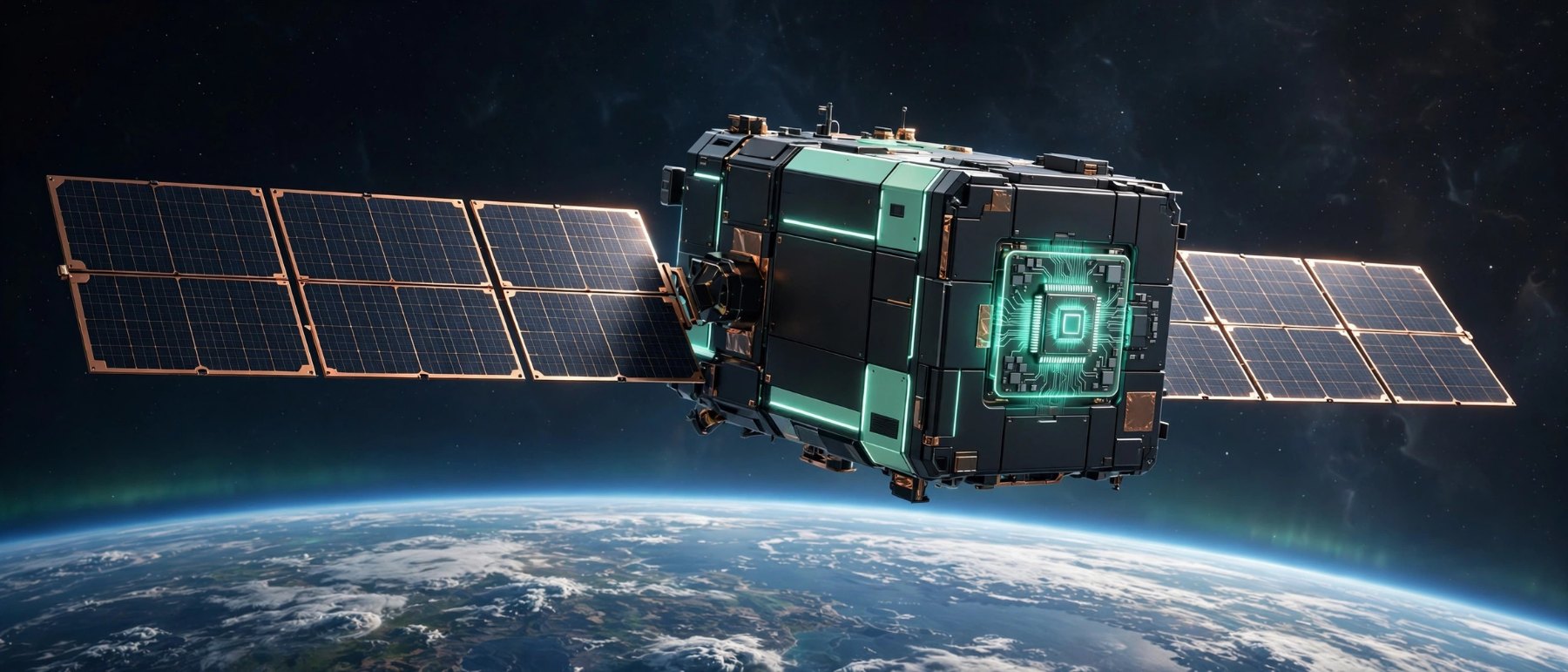
On October 1, 2026, a refrigerator-sized satellite rode a SpaceX Falcon 9 into orbit from Vandenberg Space Force Base in California, one of about 130 payloads on the Transporter-18 rideshare flight [1][3][4]. Inside were four of Google's Tensor Processing Units — Trillium-generation chips, the same family that runs AI workloads in Google's terrestrial cloud [1][4]. The spacecraft, which Google calls MVP, is the first prototype of Project Suncatcher, the company's research effort to find out whether AI computing can one day live in orbit [1][3].[1][3][4]
The details matter because of what they rule out. This is not a data center in space; it is a survival test with the computing power of roughly one ground server — a standard Google Cloud TPU v6e-4 slice [1][4]. It is also the first time Google's TPUs have ever operated in space [1][4]. Google confirmed contact with the satellite after deployment and says it is operating as expected [1][3].[1][3][4]
Why the sky looks like a data center
The reason is power. Every question put to a chatbot is answered by chips doing arithmetic and giving off heat, and multiplied by billions of questions that means data centers hungry for electricity, land, and cooling water [2]. On the ground, those hungers are colliding with grid limits, planning permission, and community opposition — the same constraints SpaceX's own FCC filing cites when it calls orbital data centers the most efficient way to meet accelerating AI demand [7].[1][2][7]
Orbit offers what the ground cannot: near-constant sunlight with no night, no clouds, and no atmosphere in the way. Google estimates that solar panels in the right orbit can collect up to eight times more energy per year than the same panels on Earth [1][2]. That potential power density is the whole premise — and Google is careful to call the project a long-term research moonshot, not a product, with no commercial timeline announced [1][2].[1][2][7]
The orbit is the power plant
The satellite flies a dawn-dusk sun-synchronous orbit at roughly 650 kilometers, riding the line between day and night so the Sun almost never sets on its panels [4][6]. In that orbit a satellite needs few batteries, because eclipses are rare and brief — sunlight is the power supply, not a supplement [2][4].[1][2][4][6]
The solar arrays are rated at about one kilowatt — roughly what a hair dryer draws, and roughly one data-center server's worth of power [1][4]. Everything about the mission is sized to that budget: the chips, the duty cycle, and the cooling all answer to a single kilowatt in a place where plugging in is not an option [1][5].[1][2][4][6]

Fifteen minutes at a time
The four TPUs do not run continuously. They compute in bursts of roughly fifteen minutes, during which the satellite runs Google's AI models to benchmark real performance in orbital conditions, then the chips shut down for a mandatory cooldown [1][4]. The stop-start rhythm is not a software choice; it is thermal physics asserting itself [1][5].[1][2][4][5][6]
That rhythm is also the experiment. By running real AI workloads in short bursts and watching for errors, Google gets a year of data on how production chips behave outside the server room — data no ground test can fully substitute [1][2]. The mission is planned to run about a year, with the satellite expected to deorbit within roughly six [1][6].[1][2][4][5][6]
Surviving the ride up
Getting to orbit is violent. The ride lasts about ten minutes, with sustained loads up to ten times Earth's gravity — and sensitive components like TPU chips can experience shocks of fifty to one hundred g as the rocket shakes [6]. Before approving the flight, Google vibration-tested the satellite along all three axes to mimic launch frequencies [1][6].[1][3][6]
The ground test was the first gate; surviving the actual launch was the second [6]. That the satellite phoned home and is operating as expected means the packaging, mounting, and interconnects held through the worst mechanical stress the hardware will ever see [1][3]. Everything after this is the slow grind of the space environment itself [2].[1][3][6]
Radiation: the test everyone expected
Space adds a threat no server room has: fast charged particles that flip bits in memory and wear electronics down over time [2]. To get ahead of it, Google fired a proton beam at Trillium chips at the University of California, Davis's Crocker Nuclear Laboratory while the chips ran AI workloads, tracking bit flips and failures [1][6].[1][2][6]
The results were encouraging. The chips took a total ionizing dose greater than a five-year mission would deliver, with no hard failure through 15 kilorads — roughly twenty times the expected mission dose [1][2]. The weak point was the high-bandwidth memory beside the chips, which showed irregularities at about 2 kilorads — still nearly three times the mission dose, but the clear thing to watch in orbit [2][6].[1][2][6]
Heat: the real enemy
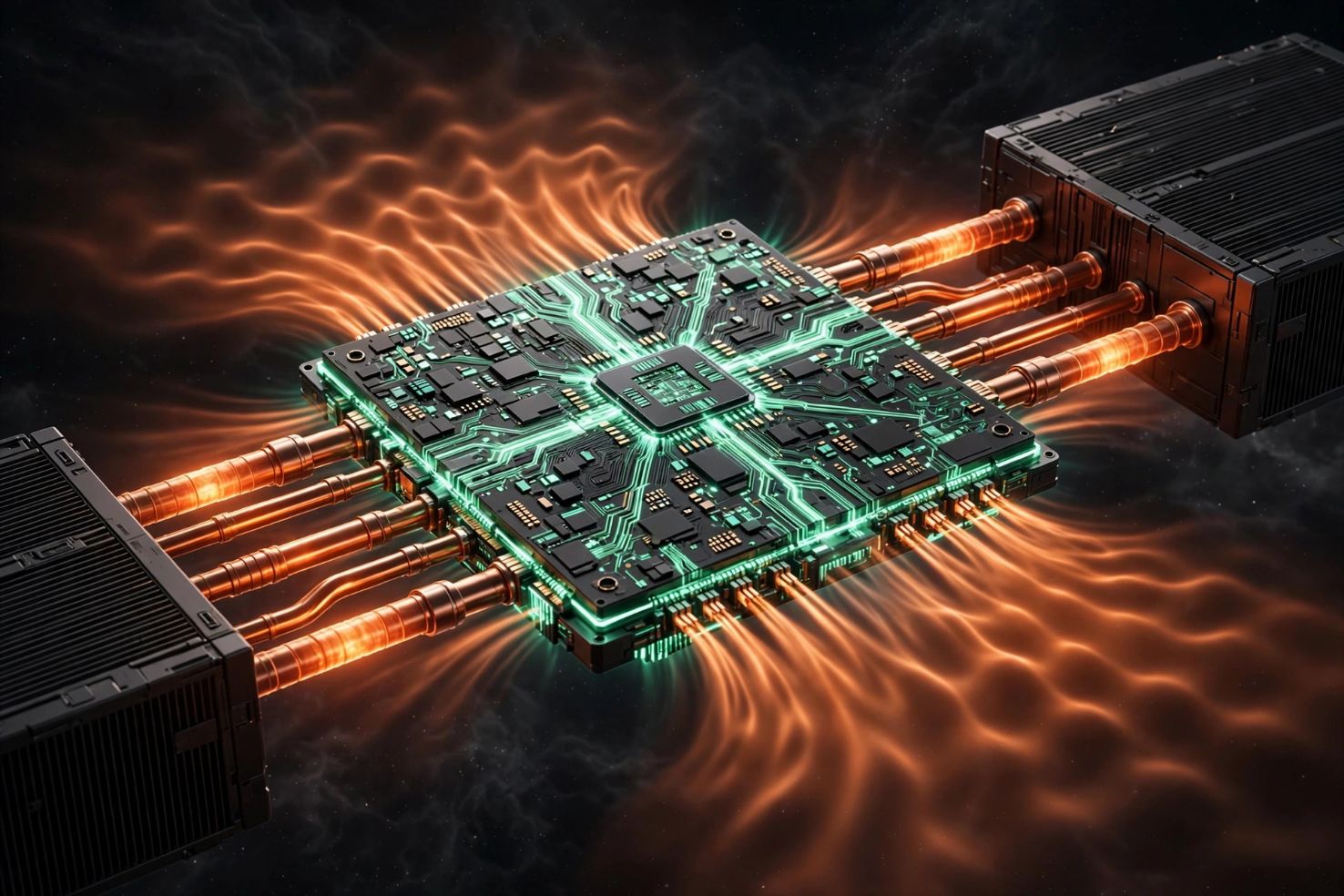
Here is the problem the headlines missed: in space there is no air and no water to carry heat away. On Earth, fans and water loops do that work; in orbit, the only way to lose heat is to radiate it from a surface as infrared light [2]. Google's prototype cools its chips with heat pipes and radiators instead of airflow — a closed-loop heat-pipe radiator system, since convection does not exist in a vacuum [1][5].[1][2][4][5]
Radiators are heavy, and every kilogram costs money to launch — which is exactly why the chips run fifteen-minute bursts instead of flat out [2]. This is the central engineering tension of orbital computing: the power is nearly free, but rejecting the waste heat is expensive in mass, and mass is what launch pricing charges for [2][5]. If space data centers ever work, they will be won or lost on thermal design [4].[1][2][4][5]
Next: lasers between satellites
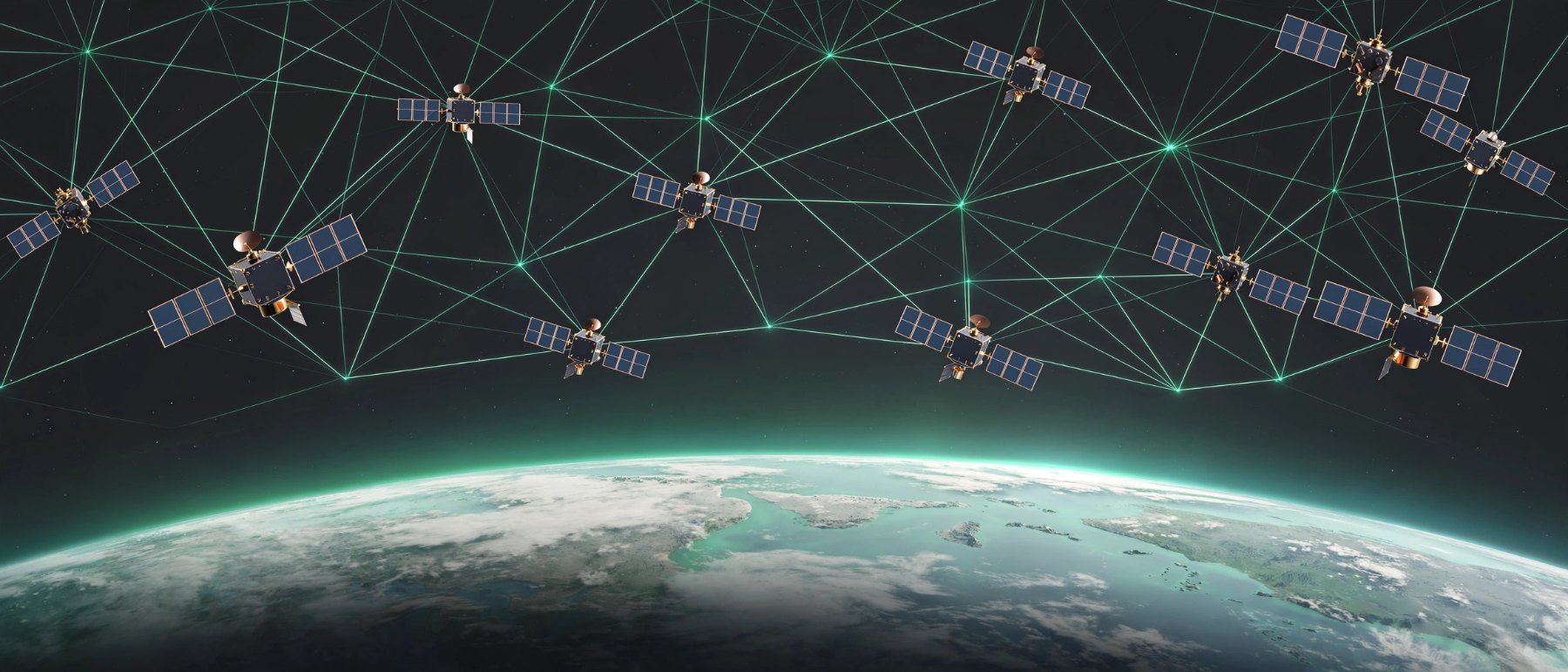
The current satellite flies alone, but the plan does not end there. Google has committed to launching two more TPU-equipped satellites with Planet Labs in 2027 to test high-bandwidth laser links between spacecraft in orbit [1][2]. The company's research sketches an eventual design of 81 satellites flying in formation, connected by free-space optical links [1][2].[1][2][3]
The pointing precision those links demand is extreme — keeping two fast-moving endpoints aligned tightly enough for a laser link is one of the hardest parts of the 2027 test [1][2]. Until satellites can talk to each other at speed, there is no constellation and no data center — just isolated experiments [2][3].[1][2][3]
The economics question
None of the engineering matters if the arithmetic does not work. Google's own analysis says orbital compute could match ground data centers, per unit of power, by the mid-2030s — thanks to free solar power and radiative cooling — but that forecast leans entirely on launch costs falling dramatically [2][7]. SpaceX's filing makes the same bet explicit, pointing to a reusable Starship as the critical lever for bringing compute to orbit cheaply [7].[1][2][7]
Google is candid about the distance. It calls Suncatcher a long-term research moonshot and has announced no timeline for any commercial service [1][2]. Four chips on a fifteen-minute duty cycle is a materials test; it cannot show cost per calculation, which is the number that decides whether orbit beats the ground [2]. Read orbital AI as a direction, not a plan [2].[1][2][7]
SpaceX's answer: a million satellites
While Google flies a cautious experiment, SpaceX has filed for the opposite of caution. In early 2026 the company asked the US Federal Communications Commission for permission to operate up to one million orbital data-center satellites — "a constellation of satellites with unprecedented computing capacity to power advanced artificial intelligence models," in the filing's words [7][8]. It would be by far the largest megaconstellation ever proposed [7][8].[7][8]
The filing sets a ceiling, not a schedule: it is an authorization request under review, not an approved deployment plan [8]. But the technical shape is clear — the satellites are compute nodes first, not communications relays, designed to run AI workloads and connect to Starlink via high-bandwidth optical links that carry results back to ground stations [7][8].[7][8]
Starmind: the name and the plan
The constellation now has a name. Musk confirmed "Starmind" as the official name for the orbital AI compute system after a trademark filing surfaced [8][9]. The roadmap as described across coverage: the first AI1 prototype satellites launching in early 2027, with volume production targeted for year-end at a dedicated facility called Gigasat [9][10].[7][8][9][10]
The bet is the same one Google is testing from the other end: terrestrial data centers are running into power, land, and permitting limits, while orbit offers continuous solar input with minimal operating costs [7][9]. Whether that bet pays depends on manufacturing at a scale no one has attempted and launch prices no one has yet achieved — which is why the filings read as ambition first, schedule second [7][8].[7][8][9][10]
What this proves, and what it doesn't
Take the claims in order. Proven, pending the year's data: whether ordinary AI chips, properly protected, can simply work in space — through launch shock, radiation, and thermal cycling [1][2]. Not proven: anything about economics. A four-chip satellite cannot tell you the cost of a useful calculation in orbit, and the hard parts — formation flying, inter-satellite lasers, large radiators, many-chip satellites — have not flown [2].[1][2][5]
There is a final, unforgiving constraint: repair. A failed chip on Earth is swapped in minutes; in orbit it stays failed, so redundancy must be designed in from day one [2][5]. Google has done the sensible first thing — fly something small and cheap, and measure honestly. The race to put AI in orbit is real, well-funded, and technically serious. It is also, for now, a race of prototypes [1][2].[1][2][5]
Questions, answered.
Has Google built a data center in space?
No. Project Suncatcher's MVP is a four-chip survival test with about a kilowatt of power — roughly one server. Google calls it a long-term research moonshot and has announced no commercial timeline [1][2].[1][2]
Why put AI in space at all?
Near-constant sunlight for power, and none of the land, water, or permitting constraints that limit data centers on Earth. The trade-off is that cooling in a vacuum is hard and launch is expensive [2][7].[2][7]
Can chips survive space radiation?
Ground tests are encouraging: Google's TPUs survived more than a five-year mission's radiation dose in a proton beam, though memory showed glitches earlier. The real verdict comes from the year in orbit [1][2][6].[1][2][6]
Read the sources.
- Google's Project Suncatcher puts four AI chips into orbit aboard SpaceX Transporter-18GCN · Accessed 2026-10-21
- Google Suncatcher: Four AI Chips in Orbit, Now the Hard PartFrontier Signal · Accessed 2026-10-21
- Google launches Project Suncatcher, a step towards AI data centers in spaceRocketNews · Accessed 2026-10-21
- Google put AI chips in orbit: radiation is not the problem, heat isWorld Programming · Accessed 2026-10-21
- Google Launches First AI Chip Test Satellite as Orbital Data Center Race AcceleratesNILE1 · Accessed 2026-10-21
- Google's Project Suncatcher Puts Four TPUs in Orbit to Test Space-Based AI ComputeRedEye Eagle · Accessed 2026-10-21
- SpaceX files for million satellite orbital AI data center megaconstellationData Center Dynamics · Accessed 2026-10-21
- SpaceX reveals how its 1 Million AI satellite network will work and prevent space collisionsTeslarati · Accessed 2026-10-21
- Bits & Orbits Weekly Issue 6: Orbital AI Gets CorporateBits & Orbits · Accessed 2026-10-21
- SpaceX names its AI Orbital Data Center satellite constellationNotebookcheck · Accessed 2026-10-21
Contributor articles and source links do not guarantee error-free reporting. See our editorial policy.