Navigate this guide · 1,744 words
The essential signal
- Phantom X is a sensor implanted just under the skin that reads EMG signals from remaining muscles and converts them into wireless commands for prosthetic limbs; the first human implants were announced on 20 October 2026.
- The CYBORG early feasibility study in Melbourne is small and safety-first: around 10 participants, outpatient procedures of roughly an hour, and structured follow-up before any conclusions are drawn.
- The engineering bet is that a fixed, implanted position beats surface electrodes on signal consistency and calibration life — at the cost of a minor surgical procedure.
- The system cannot yet combine simultaneous movements, and it remains investigational: not approved for commercial use anywhere.
A first for muscle-machine interfaces
On 20 October 2026, Phantom Neuro announced that the first participants in its CYBORG early feasibility study have received the Phantom X implant, a sensor placed under the skin of the residual limb that turns muscle signals into wireless commands for a prosthetic limb. The procedures were performed at Cabrini Health in Melbourne, Australia, and they mark the first time the company's sensor has been implanted in human participants.[1][2][3]
The significance is less about a single device than about where it sits. Efforts to control powered prostheses have generally aimed at the brain, at peripheral nerves, or at muscles through the skin. Phantom X tries a fourth position: just beneath the skin, close enough to the muscles to hear them clearly, but without the deep probes or brain surgery that other approaches can involve.[1][2][3]
What Phantom X actually is
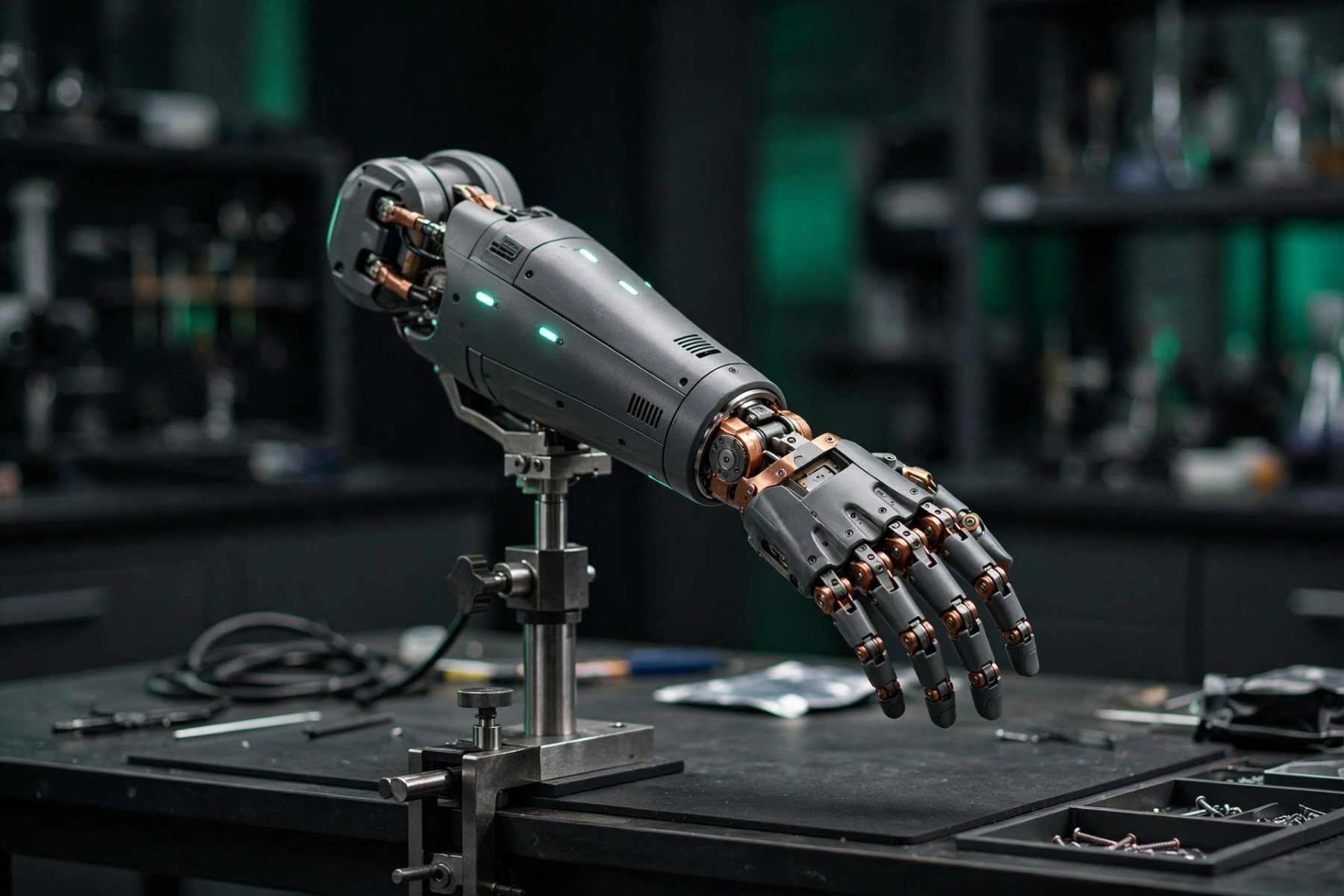
Phantom X is a sensor device implanted beneath the skin, over the muscles in the residual limb. When a person attempts to move their missing fingers or wrist, the remaining muscles still generate electrical signals. The system detects and interprets those signals, then translates them into commands for a compatible prosthetic device, so the wearer drives the robotic limb by attempting the movement itself rather than by learning an artificial control scheme.[1][2][5]
The registered study description fills in the architecture. Per the ClinicalTrials.gov record for the CYBORG study (NCT07325708), the system consists of an implanted EMG sensor array, an implanted telemetry module, and an external wearable interface that provides real-time muscle signals to a myoelectric prosthesis. Phantom Neuro describes the approach as a muscle-machine interface, and IEEE Spectrum notes the implant is intended to work with third-party prostheses rather than only the company's own hardware.[1][2][5]
The signal it listens to: electromyography, explained
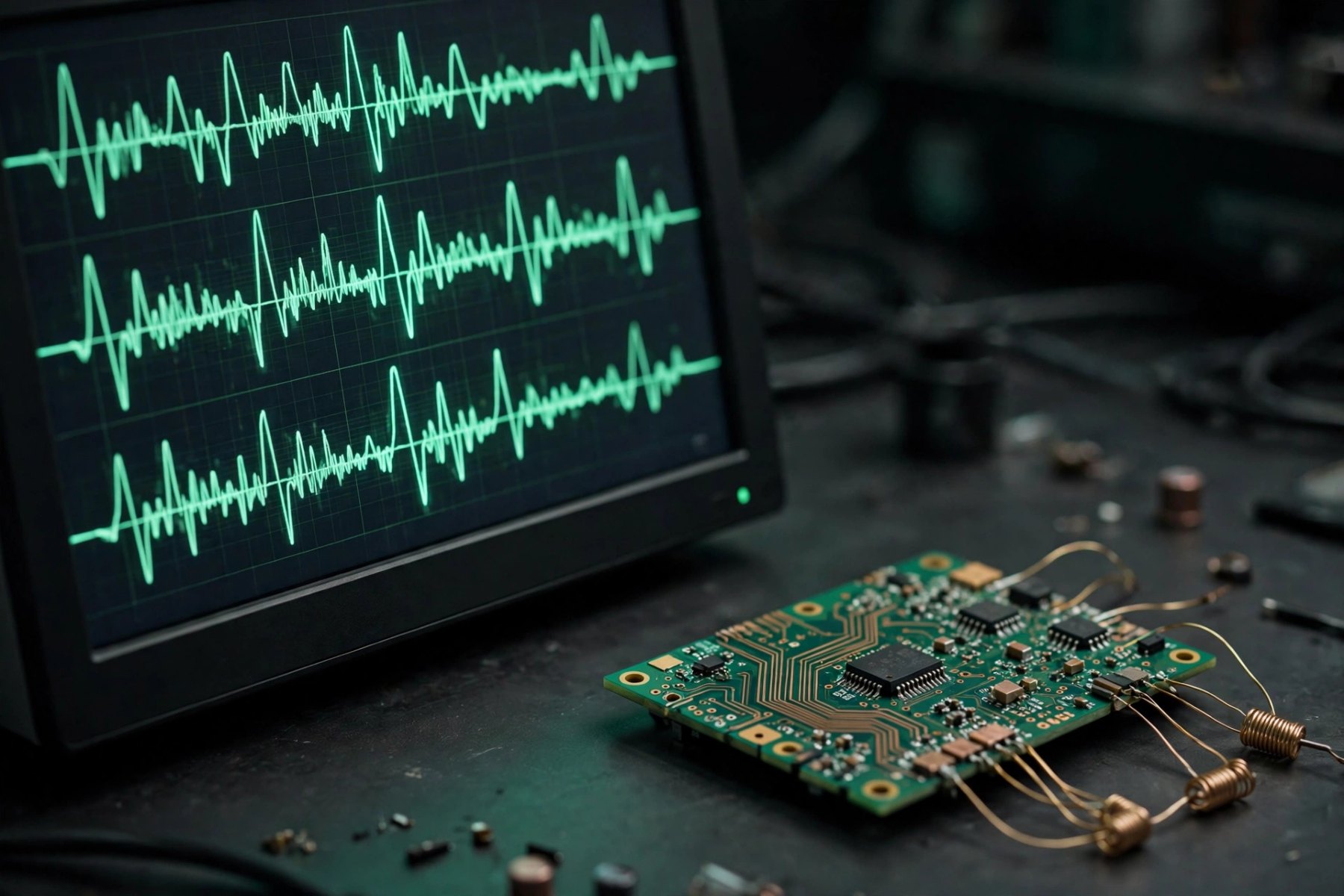
Electromyography, usually shortened to EMG, is the measurement of the electrical activity muscles produce when they contract. Every intended movement begins as electrical chatter: motor neurons fire, muscle fibres respond, and the resulting signal follows a pattern that depends on which muscles were recruited and how hard. Electrodes near those muscles can pick the pattern up, and software can learn which pattern belongs to which intended gesture.[1][2]
This works after amputation because the machinery of intention survives. As Phantom Neuro's founder and CEO Connor Glass puts it in the company's announcement, most people who have lost a limb retain the ability to control that limb, down to individual fingers, in their mind's eye — the familiar phantom limb phenomenon. The muscles that once served the hand still fire when the person attempts to move it. Phantom X aims to capture the signals associated with those intended movements and translate them into actual movements of a robotic limb.[1][2]
Inside the implant: electrodes, electronics and a power coil
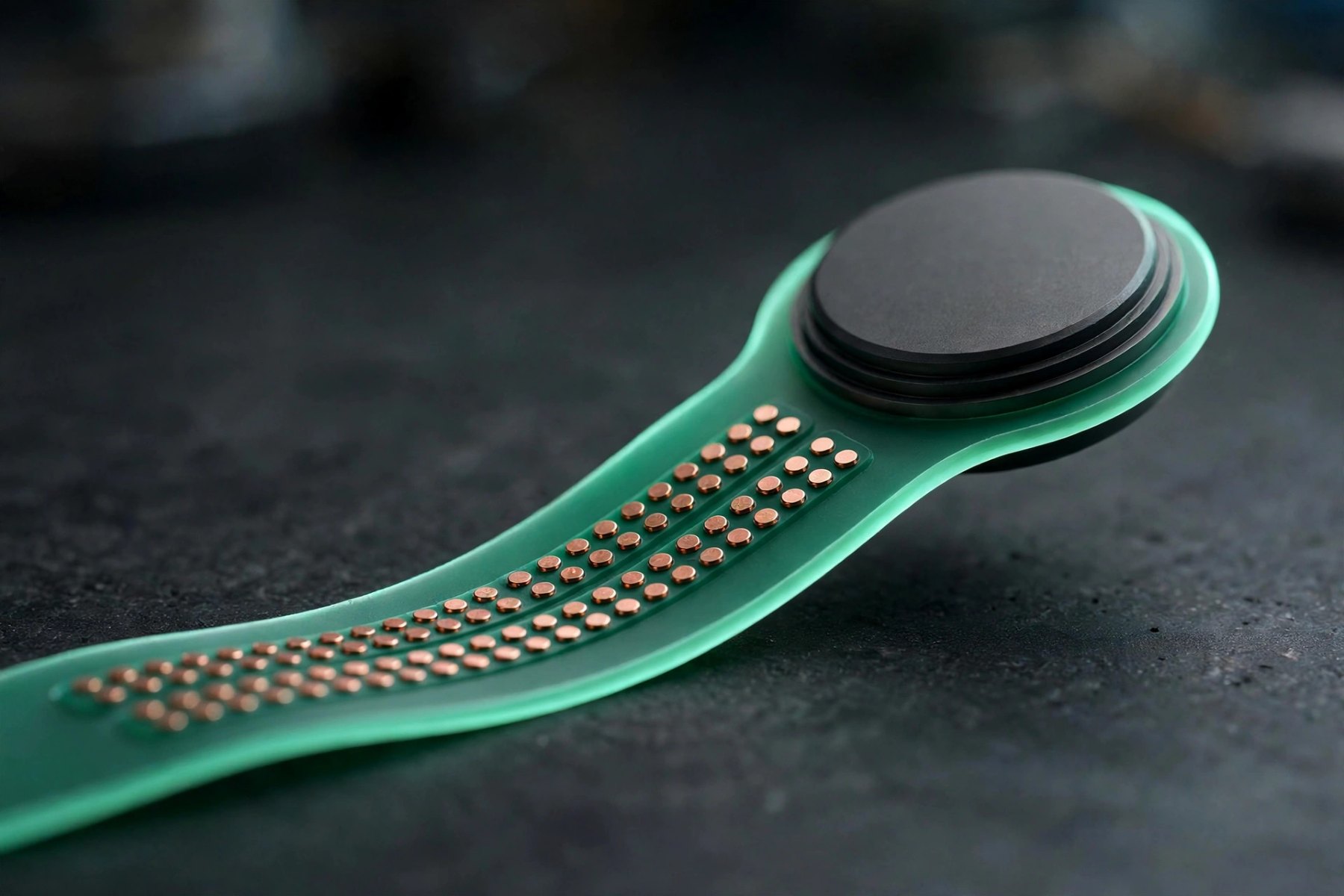
IEEE Spectrum's reporting describes the hardware in unusual detail for an announcement at this stage. The implant carries two rows of electrodes embedded in flexible medical silicone, with a disc of electronics at one end that processes the signal and sends it out wirelessly. The flexible strip form factor is deliberate: it wraps around the forearm underneath the skin, following the anatomy it needs to listen to.[1]
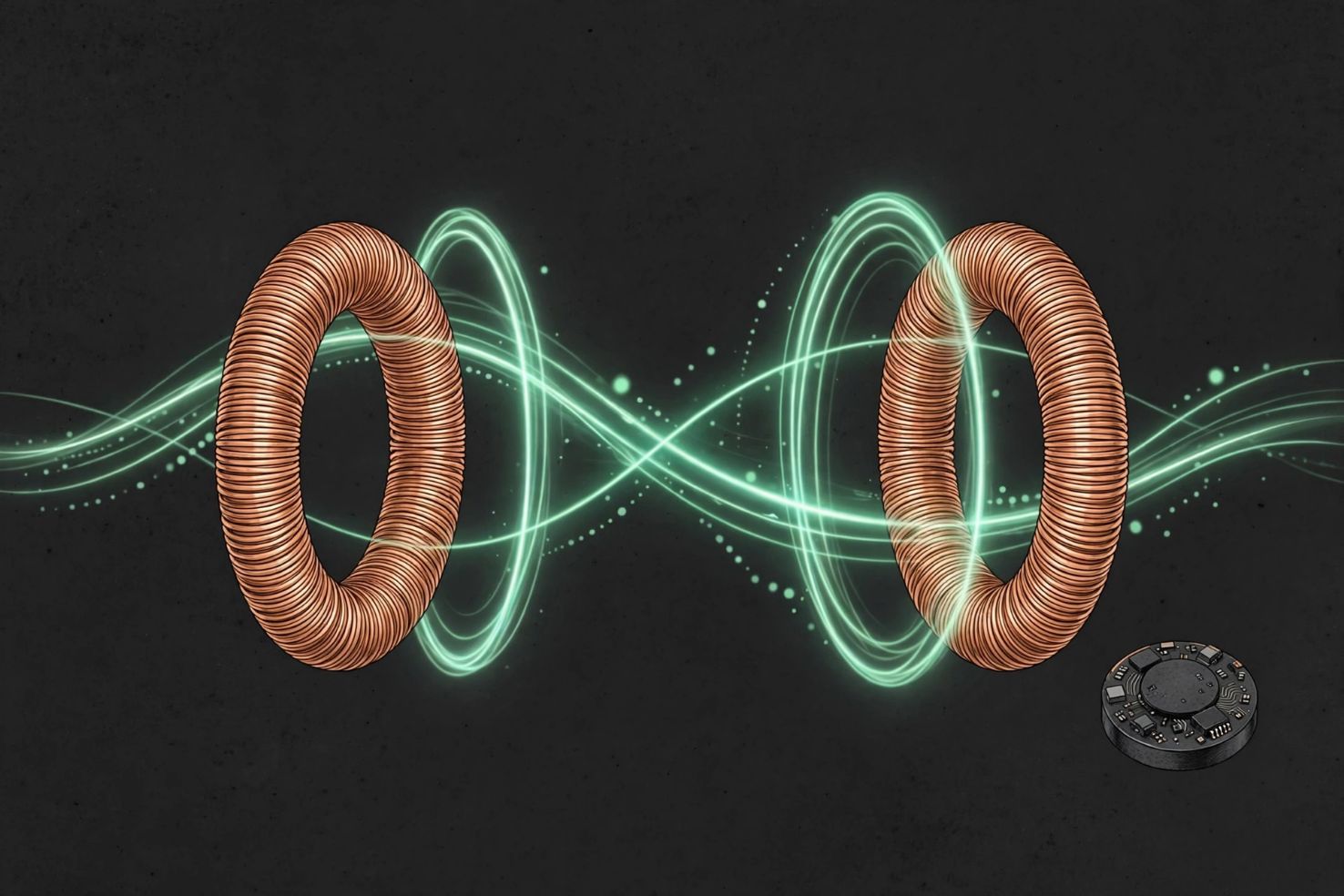
Power arrives the way it does for a cochlear implant. A coil in the centre of the device receives power from an external source by induction, so there is no battery inside the body to replace and no cable through the skin. The trade-off is that the link between the implant and its external power source has to survive everyday movement of the arm and skin, a constraint the company's engineers say they designed around from the start.[1]
Why go under the skin at all?
The obvious question is why implant anything when surface EMG already exists. Surface electrodes sit on top of the skin and are the relatively common approach, but as IEEE Spectrum's analysis sets out, they can be finicky: a small placement error moves them off the target muscle, sweat changes the electrical impedance or lets them shift, they can dig in uncomfortably, and ordinary motion creates artefacts in the data. Physical activity makes most of these problems worse.[1]
An implanted sensor holds a fixed position over the muscle, which promises a steadier signal day after day. Glass told IEEE Spectrum that early muscle signals have been strong and consistent, and that calibration between intent and gesture may last months, compared with the daily recalibration some surface EMG systems require. The cost of that consistency is a surgical procedure — the company's whole pitch is that the procedure can be made small enough for the trade to be worth it.[1]
The CYBORG study: small, careful and safety-first
CYBORG is an early feasibility study, which in regulatory language means its first job is to establish safety, not to prove the device works at scale. Australian regulators approved the trial in April 2026, and the study is evaluating the safety, performance and usability of Phantom X in people with upper-limb loss. It is a prospective, single-arm, open-label design according to the trial registry, with no control group and no blinding — appropriate for a first-in-human step of this size.[2][4][5]
MobiHealthNews reports that the study will enrol 10 participants with upper-limb, below-the-elbow unilateral amputations; the registry specifies unilateral transradial amputation and wrist disarticulation. Researchers will assess surgical feasibility, device function, signal quality and the system's ability to support intuitive prosthetic control during functional tasks, alongside patient-reported outcomes. Participants receive a single outpatient implantation, recover for two weeks before being fitted with a compatible prosthesis, and are followed with evaluations over approximately 20 weeks.[2][4][5]
Procedures measured in hours, not days
The implantations themselves were strikingly undramatic by the standards of neural interfaces. Phantom Neuro and The O&P EDGE both report that the initial participants were implanted during outpatient procedures lasting roughly an hour each, without the use of general anaesthesia. Dr Michael Lo, a plastic and reconstructive surgeon, performed the procedures at Cabrini Health, with prosthetic care, occupational therapy and testing provided by ProMotion Prosthetics and Enable Rehab.[1][2][3]
IEEE Spectrum adds the texture: the first recipient's operation took around an hour under mild sedation, with the whole process lasting about four hours, and the second participant's procedure took around 45 minutes, with the patient in and out of hospital in three hours. The first participant, Michael Easy, reported soreness for the first couple of days and some swelling for two weeks afterwards. Glass describes the surgery as creating a pocket under the skin, comparable to common cosmetic implant procedures, and says removal is expected to be simpler than implantation.[1][2][3]
Early signals, stated honestly
So what do we actually know so far? The company says muscle signals from the first implants have been strong and consistent, and the first participant has described the resulting control as easier, smoother and faster. Those are genuinely encouraging early signs, and they come from a study designed to look for exactly them.[2][3]
But the honest caveats matter as much as the signals. Phantom Neuro's own announcement, echoed by The O&P EDGE, is explicit: the implantations are an early clinical milestone, the study is ongoing, and conclusions about the system's safety, effectiveness and ability to improve prosthetic control will depend on further evaluation. Phantom X is investigational and is not approved for commercial use. Two participants, however promising, are the start of an evidence trail, not the end of one.[2][3]
What it cannot do yet
The current system has a clear technical ceiling. Phantom's implants use machine learning to associate muscle signals with specific gestures or movements, and the same action can be performed at different speeds. But the implant cannot yet combine motions — wrist rotation and finger movement, for example, have to happen step by step rather than together to complete some tasks.[1]
Closing that gap is the stated long-term goal: more sophisticated pattern recognition to achieve what Glass calls simultaneous proportional control, where multiple movements blend at once with graded force, the way an intact hand behaves. Until then, the device offers reliable single gestures rather than the full choreography of a natural limb, and that distinction is the difference between a successful feasibility study and a product people would choose for daily life.[1]
The unglamorous problem: prostheses do not share a language
One of the hardest problems here is not sensing at all. Phantom designed the implant to be compatible with a wide range of commercially available prostheses, but as IEEE Spectrum points out, those prostheses do not have standardised communication protocols. Every pairing is, to some degree, bespoke integration work, and the interface has to stay reliable across all of them.[1]
The physical demands are just as unglamorous. The implant must withstand minor impacts from daily activity, keep its electrode array in tune with muscles that change with use, and maintain connection with an external power source despite constant movement of the arm and skin. None of these challenges is exotic; all of them are the kind that decide whether a clever sensor becomes a dependable medical device or remains a laboratory achievement.[1]
How independent experts are reading it
Specialists who were not involved in the work see real promise, with conditions attached. Helen Huang, a biomedical engineer at North Carolina State University, told IEEE Spectrum she sees a tremendous potential benefit for patients to use the technology every day more reliably — while noting, as other experts did, that at this early stage many aspects of the device remain to be proven, and hoping for more public technical information.[1]
Loredana Zollo of the Università Campus Bio-Medico di Roma made the success criterion precise: the potential advantages must translate into tangible benefits for users, including more natural and reliable prosthetic control, reduced effort, and improved performance in daily activities. That is the right test for the CYBORG data when it arrives — not whether the signals look clean in a clinic, but whether daily life measurably improves.[1]
The road from a feasibility study to a product
Glass is hopeful that, over the next two to three years, clinical trial progression will lead to United States FDA approval for upper-limb prosthesis control. That is a company expectation, not a regulatory commitment, and feasibility studies have a way of teaching humility. Still, the direction of travel is visible: after upper limbs, the company may pursue other patient groups, including the particularly difficult problem of lower-limb prostheses.[1][2][4][6]
The wider ambition is already on the record. Phantom Neuro's own description of its mission covers prosthetic limbs, exoskeletons and future robotic systems, and MobiHealthNews likewise describes the company as building a muscle-machine interface for prosthetics and robotic exoskeletons. IEEE Spectrum notes the company is also exploring general augmentation and human-machine interaction in defence settings — and that, per the research literature it cites, no commercial systems that use EMG for prosthesis control are yet available. Whoever ships the first one will not just launch a product; they will define a category.[1][2][4][6]
Questions, answered.
What is Phantom X?
Phantom X is Phantom Neuro's implantable EMG sensor system. A sensor array placed under the skin of the residual limb detects the electrical signals produced when the wearer attempts to move their missing hand or wrist, and an implanted telemetry module plus an external wearable interface turn those signals into real-time commands for a myoelectric prosthesis.[1][2][5]
How is this different from existing myoelectric prostheses?
Conventional myoelectric control usually relies on surface EMG: electrodes resting on the skin. Surface electrodes are sensitive to placement, sweat, shifting and motion artefacts, and may need daily recalibration. Phantom X moves the sensor under the skin to a fixed position, which the company expects will give stronger, more consistent signals and calibration that lasts far longer.[1]
Can patients get Phantom X now?
No. Phantom X is investigational and not approved for commercial use. It is currently being evaluated in the CYBORG early feasibility study in Melbourne, Australia, and Phantom Neuro's chief executive has spoken of a two-to-three-year path toward possible United States FDA approval for upper-limb prosthesis control.[1][2]
Who is taking part in the CYBORG study?
The study is enrolling 10 people with unilateral below-elbow (transradial) amputations or wrist disarticulation. Participants receive a single outpatient implantation, recover for about two weeks, are then fitted with a compatible prosthesis, and complete follow-up evaluations over roughly 20 weeks.[4][5]
Does the implant need its battery replaced?
There is no battery to swap. A coil in the centre of the device receives power from an external source by induction, the same principle used to power cochlear implants, according to IEEE Spectrum's description of the hardware.[1]
Read the sources.
- Phantom Neuro Trials New EMG Implant for ProsthesesIEEE Spectrum · Accessed 2026-10-28
- Phantom Neuro Implants Neural Interface in Humans for the First TimePhantom Neuro via PR Newswire · Accessed 2026-10-28
- First Phantom Neuro Neural Interface Implanted in HumansThe O&P EDGE · Accessed 2026-10-28
- Phantom Neuro gains study approval for Phantom X prosthetic control systemMobiHealthNews · Accessed 2026-10-28
- CYBORG study record NCT07325708ClinicalTrials.gov · Accessed 2026-10-28
- Phantom Neuro (company website)Phantom Neuro · Accessed 2026-10-28
Contributor articles and source links do not guarantee error-free reporting. See our editorial policy.